
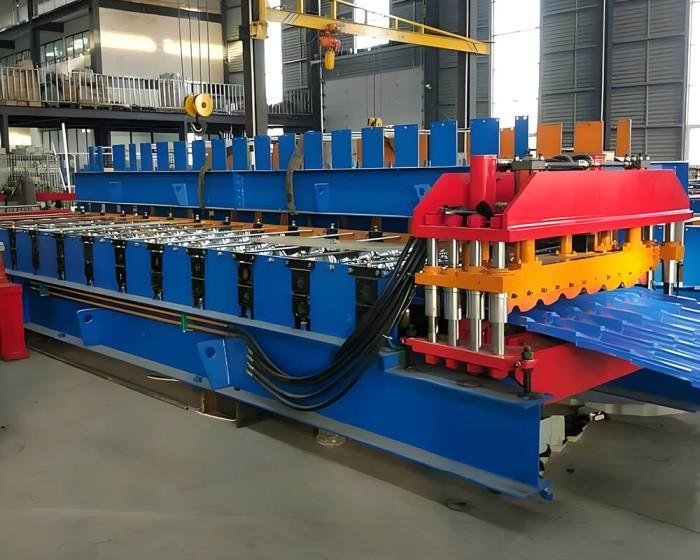
The construction industry continues to evolve as developers and contractors seek faster, more efficient, and cost-effective building methods. Modern residential, commercial, and industrial projects require structural components that offer both strength and precision while supporting quicker installation. To meet these demands, steel framing machines have become an essential part of today's manufacturing process.
Steel framing machines produce high-quality structural components with consistent dimensions and excellent accuracy. By automating the production process and integratingautomatic stacking systems, these machines help manufacturers increase efficiency, reduce material waste, improve material handling, and deliver reliable steel products for a wide range of construction and infrastructure projects.
Why Steel Framing Machines Are Essential
Modern construction relies heavily on prefabricated steel components because they offer excellent strength, durability, and design flexibility. Producing these components manually can be time-consuming and may lead to inconsistencies in product quality.
Steel framing machines streamline production by continuously forming steel into precise structural profiles. This automated process allows manufacturers to produce large quantities of framing components while maintaining strict quality standards and improving overall productivity.
Benefits of Steel Framing Machines
Faster Production Speed
One of the greatest advantages of steel framing machines is their ability to manufacture structural components continuously. Automated production reduces manual labor while increasing output, allowing manufacturers to meet tight construction schedules more efficiently.
Higher production speed also helps shorten delivery times and supports large-scale construction projects.
Precision and Consistent Quality
Accurate steel profiles are essential for safe and efficient building construction. Steel framing machines are engineered to produce components with uniform dimensions and smooth finishes throughout every production cycle.
This consistency simplifies installation, reduces fitting errors, and contributes to the overall structural integrity of completed buildings.
Improved Material Efficiency
Material optimization is an important objective in modern manufacturing. Steel framing machines minimize production waste by accurately shaping steel coils into finished profiles, helping manufacturers lower production costs while maximizing raw material utilization.
This efficient process also supports more sustainable manufacturing practices.
Automation Improves Manufacturing Performance
Advanced automation has become a key feature of modern steel framing production lines. Automated systems improve workflow while reducing manual handling throughout the manufacturing process.
Many production lines include automatic stacking technology, which automatically collects and organizes finished steel profiles after production. This feature improves workplace safety, reduces labor requirements, and ensures that finished products are prepared efficiently for storage or transportation.
Automation also enhances production consistency by maintaining stable operating conditions throughout the manufacturing cycle.
Applications in Building and Infrastructure
Steel framing machines are widely used to manufacture structural components for various projects, including:
- Residential housing
- Commercial buildings
- Industrial facilities
- Warehouses
- Educational institutions
- Healthcare buildings
- Infrastructure developments
- Agricultural structures
Their flexibility allows manufacturers to produce a wide variety of framing components that meet different project specifications.
Choosing the Right Steel Framing Equipment
Selecting suitable manufacturing equipment requires evaluating production capacity, automation features, profile accuracy, and long-term reliability.
A purlin roll forming machine is commonly used to manufacture structural purlins that support roofing systems and steel frameworks. These machines deliver precise profiles while maintaining high production efficiency.
Manufacturers producing framing components also rely on a c purlin machine to create C-shaped structural sections used in commercial, industrial, and agricultural buildings. These machines provide excellent flexibility for producing different profile sizes while ensuring consistent product quality.
Supporting the Future of Construction
As construction projects become more complex, manufacturers continue investing in advanced production technologies that improve efficiency and reduce operational costs. Smart controls, automated production systems, and intelligent monitoring are helping steel framing machines achieve even higher levels of performance.
These innovations enable manufacturers to meet growing industry demands while delivering reliable structural components for modern building and infrastructure projects.
Conclusion
Steel framing machines have become an essential part of modern construction by improving production speed, precision, and manufacturing efficiency. Their ability to produce consistent, high-quality structural components supports faster project completion while reducing material waste and labor requirements.
Whether manufacturing roofing supports or structural framing systems, solutions such as a purlin roll forming machine, integrated automatic stacking technology, and a reliable c purlin machine provide manufacturers with the performance and flexibility needed to support today's building and infrastructure industry.